
Emergency coordination, explained
Helicopter Rescue Insurance for Nepal Trekking
How CTG's Emergency Medical Transportation actually works — the real process, not a promise.
Coordinating an emergency rescue on your own, mid-trek, is not realistic — mobile signal is unreliable across much of Nepal's trail network, and weather can ground helicopters for hours or days.
Comprehensive Tourism Guard (CTG) closes that gap: Himalayan Guardian Nepal and Alpine Rescue Service assess the situation and coordinate the response, under insurance issued by IGI Prudential Insurance Limited.
Emergency Medical Transportation
Emergency Medical Transportation — ground, ambulance, helicopter, or another suitable method — is arranged based on your medical condition, your exact location and the surrounding terrain, current weather, what's operationally feasible at that moment, and applicable policy conditions. The rescue and medical process, not the traveller's preference alone, determines the appropriate method and destination.
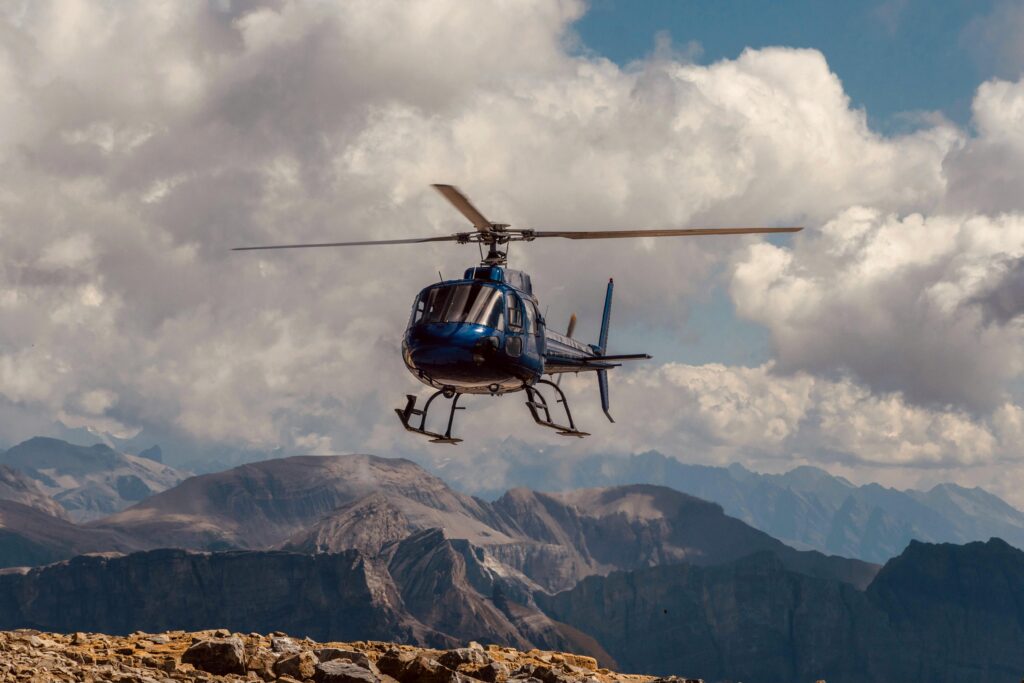
Emergency medical transportation may include helicopter evacuation when medically necessary and operationally appropriate. This isn't a guarantee that every incident results in a helicopter, and it isn't a promise of helicopter access from every location in every condition — it's a structured decision, made by people assessing the actual situation, within your plan's coverage. Report an emergency via the Emergency Call Center, or press SOS on the Tracer M3 device where included, and HGN and Alpine Rescue Service coordinate the response from there.
The Rescue Process, Step by Step
- 1
Incident
You or your guide recognize an accident or illness.
- 2
Immediate action
Appropriate safety steps are taken on the ground.
- 3
Emergency contact
SOS is activated via Tracer M3 (where included) or the Emergency Call Center is contacted directly.
- 4
Location verification
Your location and route are confirmed.
- 5
Condition assessment
The Call Center and relevant medical/rescue parties assess urgency.
- 6
Plan and policy review
Your CTG plan and applicable insurance scope are checked.
- 7
Rescue planning
HGN and Alpine Rescue Service determine the feasible transportation method — ground, ambulance, helicopter, or other.
- 8
Dispatch
Alpine Rescue Service or the relevant provider begins the rescue/transport operation.
- 9
Medical handover
You're received by the appropriate medical provider and treatment begins.
- 10
Documentation and claims
Incident, medical and cost records are compiled to support any applicable insurance claim, which IGI Prudential then assesses and settles.
As a general rule, rescue should go through this authorized process. The policy does allow a limited exception for genuine emergencies where prompt contact wasn't possible, subject to verification. SOS should only be used for genuine emergencies; misuse can result in liability for the resulting costs.
Rescue partner
Alpine Rescue Service is Himalayan Guardian Nepal's confirmed rescue partner for CTG operations — HGN and Alpine Rescue Service determine the feasible transportation method together, and Alpine Rescue Service or the relevant provider carries out the dispatch.
Rescue & Evacuation Questions
How Emergency Medical Transportation and helicopter coordination actually work.
Still have questions? Contact usAlpine Rescue Service.
Coverage varies by provider. Under CTG, emergency medical transportation may include helicopter evacuation when medically necessary and operationally appropriate.
Yes, as one possible form of Emergency Medical Transportation, determined by medical need and on-ground conditions — not as an automatic or guaranteed outcome for every incident.
Through a coordinated process: emergency contact, location and condition assessment, a rescue plan formed by HGN and Alpine Rescue Service, transportation, and medical handover.
Medically necessary transportation — ground, ambulance, helicopter or another suitable method — to appropriate treatment, arranged according to your condition and circumstances.
Report an incident within 48 hours, submit documentation within 21 days (subject to exceptions), and HGN assists with the process while IGI Prudential assesses and settles the claim.
Know the Process
Before You Need It.
See the full CTG product — coverage and altitude tiers — before you check pricing.